

Jelajahi Ocean Park.
Ocean Park Corporation and The Coral Academy at the School of Life Sciences of The Chinese University of Hong Kong (CUHK) signed a Memorandum of Understanding (MOU) today to solidify joint efforts in scientific collaboration, education, capacity building and public awareness for marine conservation, with a special focus on corals.
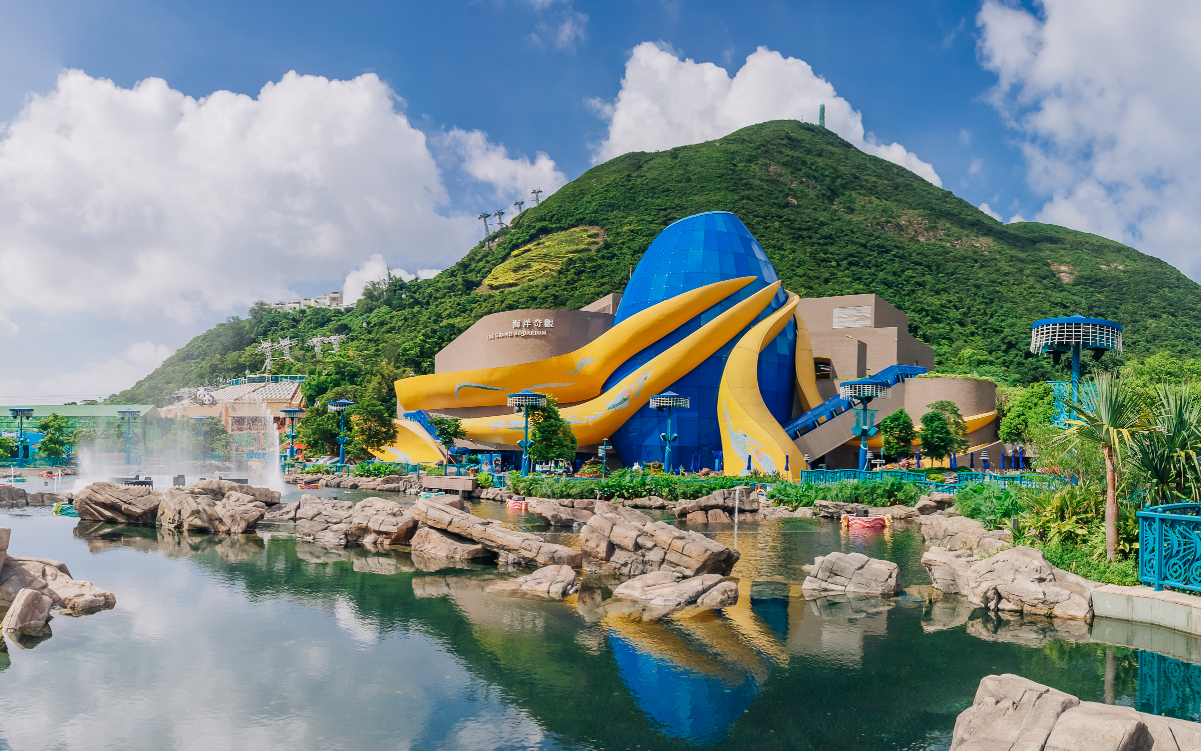
The MOU outlines a robust framework for academic and research projects related to marine conservation, including conservation practices, technology and knowledge transfer, as well as joint public engagement and educational initiatives. The partnership also marked the launch of a new Live Marine Biodiversity Display at The Grand Aquarium in Ocean Park, featuring local marine species including hard corals that will be nurtured in order to restore coral communities in Hong Kong waters.
“We are incredibly excited about this pivotal development. Our strengthened collaboration with CUHK, formalised by today’s MOU, will combine Ocean Park’s expertise in marine life stewardship and public outreach with CUHK’s academic excellence and cutting-edge research, creating a powerful force in safeguarding Hong Kong’s marine diversity and coral communities. Our joint efforts with The Coral Academy at CUHK’s School of Life Sciences to introduce the new Live Marine Biodiversity Display at The Grand Aquarium, with 12 coral species that can be found in Hong Kong, not only help to nurture rescued coral fragments and reverse the decline of local coral ecosystems but also enhance public awareness and knowledge of our city’s rich marine biodiversity, environmental issues and solutions,” said Howard Chuk, Executive Director, Zoological Operations and Conservation, Ocean Park Corporation.
Professor Song Chunshan, Dean of Science, The Chinese University of Hong Kong, said, “the collaboration between Coral Academy at CUHK’s School of Life Sciences and Ocean Park Hong Kong exemplifies our commitment to bridging academic excellence with real-world conservation efforts that directly benefit our city’s marine ecosystems, especially our precious coral communities. Through joint scientific research, educational programmes, and capacity building, we aim to reach the public broadly and inspire the next generation of scientists, educators, and conservationists. Our team at CUHK look forward to collaborating more closely with Ocean Park to advance our shared vision of safeguarding Hong Kong’s marine biodiversity and coral communities.”
Coral sanctuary at The Grand Aquarium
A project funded by the Government’s Environment and Conservation Fund (ECF), the new Live Marine Biodiversity Display at the Park’s Grand Aquarium showcases Hong Kong’s underwater biodiversity. It is a vital nursery for rescued coral fragments, where they will be nurtured for the future restoration of wild coral populations in Hong Kong waters. Coupled with the Coral Ecology and Conservation Exploration Centre located in the back-of-house area, The Grand Aquarium serves as an educational hub, promoting the delicate balance of marine ecosystems, challenges in coral conservation and the scientific efforts to protect them. In addition to viewing coral and learning from interpretative displays and videos, visitors can join guided tours to explore specialised facilities, equipment and propagation techniques for coral husbandry and restoration.
Furthermore, the Centre runs a Train-the-Trainer initiative for teachers in marine science education to enhance their knowledge of coral ecosystems, food chains and human impacts on marine life. Educators can also equip themselves with STEAM-based teaching tools, interdisciplinary content and a teacher’s kit aligned with Hong Kong’s new primary school science curriculum, allowing them to bring conservation knowledge into the classroom.
Building a sustainable future with science
Under the five-year MOU, Ocean Park will provide access to its facilities, experienced staff and technical expertise for marine husbandry and conservation practices, ensuring quality care for marine samples transferred from CUHK. In turn, CUHK’s Coral Academy will supply Ocean Park with marine samples, including coral fragments, juvenile corals cultured through sexual propagation, and seahorses, for education and conservation purposes. It will also offer professional advice on local coral nursery techniques and encourage the active engagement of its staff and students in collaborative research and educational activities. This synergy will enable both parties to develop impactful marine education and conservation programmes, benefitting Hong Kong’s marine environment and contributing to improved regional conservation outcomes.